Product Description
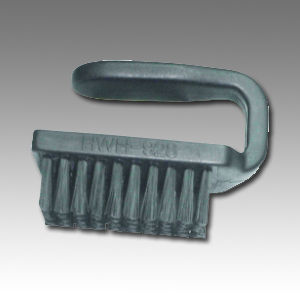
With access to advanced technology, we are able to offer Antistatic Brushes. These are made using qualitative anti-static raw materials, sourced by us from leading vendors. We provide these brushes to the customers in variegated sizes and colors. Offered brushes are acclaimed by customers owing to high protection, durability and lightweight. We check these brushes on variegated parameters to ensure quality as per industry laid norms and flawlessness. Furthermore, these Antistatic Brushes are delivered at the destinations of patrons within given time-frame.
ESD (Antistatic) Brushes:
- Bristles are made from conductive fibers mixed with natural hair
- Handles are made from static dissipative plastic
- brush will not create a charge and will also discharge any potential static charge
- Brushes available in three bristle types: hard, semi-fine and fine
- Available for cleanroom use
Engineered for ESD Sensitive ApplicationsThese ESD Antistatic Brushes are crafted with conductive plastic handles and soft nylon bristles to safely dissipate static charge during cleaning. Their specified surface resistance range ensures they are uniquely suited for electronics assembly, PCB maintenance, and laboratory procedures where ESD protection is paramount.
Versatility and Size OptionsAvailable in small, medium, and large variants, these brushes can be matched to your cleaning requirements and workspace scale. Their ergonomic manual trigger design supports precise handling for careful cleaning of sensitive components, ensuring efficacy for both professional and laboratory settings.
Export-Quality Manufacturing from IndiaProduced by experienced manufacturers in India, these ESD brushes meet global standards for quality and safety. As reliable exporters, suppliers, and traders, we support diverse industries in safeguarding their electronic assets from static-related risks.
FAQs of ESD Antistatic Brushes:
Q: How are ESD Antistatic Brushes typically used?
A: These brushes are manually used to clean dust, solder residues, or debris from static-sensitive surfaces such as PCBs, electronics assemblies, and laboratory equipment, helping to prevent electrostatic damage during maintenance or assembly.
Q: What materials are used in the construction of the brushes?
A: The handles are made of conductive plastic, while the bristles consist of soft, conductive nylon. These materials ensure durability and effective static dissipation during ESD-sensitive cleaning tasks.
Q: When should you use an ESD Antistatic Brush instead of a regular brush?
A: Use an ESD Antistatic Brush whenever you are cleaning sensitive electronic components, PCBs, or laboratory instruments where static discharge can damage devices, as standard brushes may generate or retain static electricity.
Q: Where are these ESD Antistatic Brushes most commonly applied?
A: They are used extensively in electronics manufacturing, PCB assembly, repair workshops, research laboratories, and environments requiring strict protection from electrostatic discharge.
Q: What is the process for cleaning with these brushes?
A: Gently glide the ESD Antistatic Brush over the targeted area in a manual, controlled motion to remove contaminants while dissipating any static charge, thus minimizing the risk of ESD damage.
Q: What are the major benefits of using ESD Antistatic Brushes?
A: Their main benefits include safe removal of particulate matter without generating static, prevention of ESD-related damage, and suitability for sensitive applications requiring precise and safe manual cleaning.



 Send Inquiry


