Product Description
Following organization guidelines, our firm is engaged in offering Kapton Tape. It is provided to the customers in different colors so as to meet their expectations. Owing to its excellence adhesive power and capability to withstand high temperature, this tape is acclaimed by our esteemed patrons. We have a team of well-trained logistics personnel, who help us to timely deliver this Kapton Tape at the destinations of our patrons.
Other details:
- Available in any width
- Length: 33mtrs
- Thickness: 2.6 mil
- Applicable at temperatures as low as -269 deg C and as high as 400 deg C
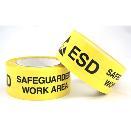
| Packaging Type |
Roll |
| Material |
PET |
| Thickness |
2 mm |
| Color |
Yellow |
| Usage/Application |
Floor Marking |
| Width |
1 inch |
| Roll Length |
90 m |
Superior Electrical and Thermal ProtectionKapton Tapes polyimide film construction with silicone adhesive provides robust electrical insulation and high dielectric strength, making it suitable for demanding conditions. Its resistance to heat, chemicals, and moisture ensures reliable protection in applications like transformer winding, PCB soldering, and coil wrapping.
Versatile Applications Across IndustriesThis tape is designed for industrial, laboratory, and electronics settings, excelling in high-temperature masking and insulation. Its flexibility and strong adhesion make it the preferred choice for professionals handling sensitive equipment, electronic assemblies, or laboratory setups requiring precision insulation.
Tailored Packaging and StorageEach roll of Kapton Tape is typically packaged in a polybag or as per customer requirements, ensuring product integrity. It is recommended to store the tape in a cool, dry place to maintain its adhesive and mechanical properties, prolonging shelf life and sustaining performance.
FAQs of Kapton Tape:
Q: How should Kapton Tape with silicone adhesive be applied for electrical insulation?
A: To apply Kapton Tape for electrical insulation, clean and dry the target surface thoroughly. Unroll the tape, align it over the area needing insulation, and press firmly to ensure proper adhesion, making sure to avoid air bubbles. Its flexibility allows smooth wrapping around wires, coils, or PCB edges.
Q: What makes Kapton Tape suitable for high-temperature masking and PCB soldering?
A: Kapton Tape is crafted from polyimide film with a silicone adhesive, providing exceptional thermal stability and resistance to temperatures encountered during PCB soldering. Its dielectric strength, strong peel adhesion, and chemical resistance make it ideal for masking sensitive areas during soldering or reflow processes.
Q: When is it recommended to use Kapton Tape in laboratory or industrial environments?
A: Kapton Tape should be used in laboratory or industrial settings whenever high-temperature resistance and electrical insulation are required, such as during transformer and coil insulation, wire harnessing, or masking components exposed to heat during manufacturing or testing processes.
Q: Where is Kapton Tape commonly utilized within electronics and electrical industries?
A: Kapton Tape is widely employed in electronics manufacturing, specifically on printed circuit boards (PCBs) during soldering, transformer insulation, cable and coil wrapping, and as insulation barriers in various electrical assemblies, thanks to its dielectric strength and robust performance.
Q: What is the recommended storage process to ensure optimal shelf life and adhesive performance of Kapton Tape?
A: To preserve adhesive qualities and extend shelf life, store Kapton Tape in a cool, dry place away from direct sunlight, moisture, and excessive heat. Keeping it in its original polybag packaging can further protect the tape from environmental exposure.
Q: How does Kapton Tape benefit users in terms of durability and compliance?
A: Kapton Tape offers excellent durability due to its high tensile strength and elongation at break, allowing it to withstand mechanical stress. Additionally, its RoHS compliance ensures it is environmentally safe and suitable for use in regulated industries.






 Send Inquiry


